Laser eye surgery in Copenhagen –
say bye to glasses and contact lenses
Laser eye surgery is a vision-correcting treatment in which a precise laser reshapes the cornea to correct vision problems such as short-sightedness, long-sightedness and astigmatism.
PREMIUM LASER EYE SURGERY
Freedom from glasses with vision correction.
price
15,000 DKK per eye
Payment plan with Sundhed+
- Laser treatment for nearsightedness, farsightedness, and astigmatism.
- Free and thorough preliminary examination
- Flap-free AQUA PRK technology
- Treatment tailored to your lifestyle
- Post-operative check-ups
- Reassuring support throughout the entire journey
The price includes a comprehensive pre-examination, a personalised treatment plan, the procedure, all follow-up appointments, and a treatment guarantee.
In short words: laser eye surgery
What is laser eye surgery?
Laser treatment of the cornea to correct vision problems
Who is it suitable for?
Typically, people over the age of 20 with stable eyesight
Typical age
Under 45 years old
Which conditions can be treated?
Short-sightedness, long-sightedness and astigmatism
Result
Less or no reliance on glasses
Price
15,000 DKK per eye
Forget glasses, contact lenses, and limitations.

Why do many patients choose a specialist eye clinic?
When you choose laser eye surgery, you are not just choosing a price. You are choosing a treatment designed to serve you every day for many years.
Our pricing reflects:
- A high level of expertise in eye surgery
- A comprehensive assessment of your eyes and a personalized treatment plan based on your lifestyle
- State-of-the-art technology and equipment
- A strong focus on safety before, during, and after treatment
For us, laser eye surgery is not about numbers. It is about finding the right treatment for each individual patient.

Wake up, perform, and stay active without worries.
Imagine waking up in the morning and seeing the clock clearly as the very first thing. Or going for a run in the rain, swimming, doing crossfit, or performing at work without contact lenses that irritate and dry out your eyes. Freedom from glasses is not just about vision correction – it is about the uninterrupted freedom to live your life to the fullest and perform optimally in every possible situation.

The journey from glasses and contact lenses to lasting freedom
Many people see laser eye surgery as a major decision—and it is. But when you add up the accumulated costs of glasses, contact lens subscriptions, and regular optician visits over the years, laser treatment is a long-term investment. Both in your personal freedom and in your finances.
Aqua PRK – High-tech surface treatment without a “flap”

Ultimate strength and stability of the cornea
When the laser works directly on the surface, the deeper structural strength of your cornea is preserved intact. After the natural healing period, your eye is just as strong and resistant to impact as it was before the procedure. This provides invaluable peace of mind for life.

The ideal laser method for an active lifestyle and contact sports.
Because AQUA PRK is a completely flap-free treatment, there is, after healing, absolutely no risk of a flap shifting or moving. This makes the method extremely popular and ideal for people with a very active lifestyle. Whether you do martial arts, crossfit, handball, professional elite sports, or have a physically demanding job, you can pursue your activities with complete peace of mind.

Jump into the water and shower without worries.
If you wear contact lenses, you know the hassle every time you take a shower, go for a swim, or jump into the sea. Water and contact lenses are a poor combination, as it both increases the risk of the lens washing out and creates conditions for harmful bacteria to develop behind the lens. With AQUA PRK, you are completely free from these concerns. Because the treatment is entirely flap-free and your eyes heal naturally, after the initial healing period you can open your eyes underwater, swim, dive, and shower with complete freedom.
AQUA PRK or LASIK - which laser eye treatment is best?
Both AQUA PRK and LASIK are excellent, safe, and state-of-the-art premium treatments. The main difference lies in how the laser gains access to correct your vision, as well as how your eyes heal afterwards.
At the Copenhagen Eye Institute, we use AQUA PRK because this method results in a strong corneal structure without the need for a flap, making it well suited to active patients.
LASIK: Fast results with minimal recovery time
- Procedure: The surgeon creates a thin flap in the cornea, lifts it aside, applies the laser, and then places the flap back.
- Healing: Fast. Vision is often good the next day and there is minimal pain.
- Fordel: Hurtig heling
- Disadvantage: Creates a permanent flap, which in rare cases can lead to complications in the event of impact or a blow to the eye, and carries a higher risk of dry eyes in the early stage.
AQUA PRK: The strong, flap-free solution for an active lifestyle
- Procedure: The surgeon completely removes the outermost cell layer (the epithelium), applies the laser directly to the surface, and places a bandage contact lens for protection.
- Healing: Slower. It takes 4-7 days for the epithelium to grow back, and vision gradually stabilizes over weeks/months.
- Advantage: Provides a structurally stronger cornea without a flap, allowing you to stay active without concern, with a lower risk of dry eyes and easier options for enhancement (touch-up) treatments.
- Drawback: Can be more painful during the healing period and requires a longer recovery time.
Read more about the difference between AQUA PRK and LASIK.
Who is suitable for laser eye surgery?
Most candidates for laser eye surgery are:
- over 20 years
- have had a stable prescription for at least 6-12 months
- has healthy eyes
- wishes to reduce the need for glasses or contact lenses
Laser eye surgery is typically not recommended for people with:
- unstable prescription
- certain corneal diseases
- Serious eye conditions
- Pronounced presbyopia
A thorough preliminary examination always determines whether the treatment is suitable for your eyes.
How an AQUA PRK laser eye surgery is performed
1. Preliminary examination
We measure your eyes and assess whether you are suitable.
2. Anesthesia
The eye is anesthetized with local anesthetic drops.
3. Laser treatment
The laser shapes the cornea with high precision.
4. Healing
A protective contact lens is placed while the cornea heals.
Ultimate peace of mind: About the AQUA PRK procedure
PRK (Photorefractive Keratectomy) is an advanced technique for correcting refractive errors with laser. During the procedure, a mild alcohol solution is applied to the cornea to loosen the outer cell layer (the epithelium), which is then gently removed.
Next, the latest technology – a solid-state ablation laser (Aquariuz from Ziemer Ophthalmic Systems AG) – is used to reshape the underlying corneal tissue in order to correct the refractive error.
When the procedure is finished, a soft protective contact lens is placed on the cornea to promote healing and increase comfort. PRK can be effectively used to treat:
- Nearsightedness (myopia)
- Farsightedness (hypermetropia)
- Astigmatism
The degree of vision correction is tailored individually and depends, among other things, on the thickness of the cornea and the stability of the vision.
The treatment is intended for individuals over 18 years old with myopia, hypermetropia, and/or astigmatism, and whose vision has been stable for at least 6 months prior to the planned surgery.
People with age-related farsightedness (presbyopia) can in some cases also be candidates for AQUA PRK, but it may still be necessary to use reading glasses after the procedure. A special monovision treatment may be considered for these patients.
A comfortable treatment for the eyes.
AQUARIUZ treats the eye in a gentle way without unnecessarily drying out the cornea. This helps preserve the eye’s natural moisture balance during treatment, which can make the experience more comfortable and contribute to stable and precise results.
Almost no odour during the treatment.
With traditional laser treatments, a characteristic “burning” smell can sometimes occur. With AQUARIUZ, this odour is significantly reduced. The system effectively removes particles and smells, creating a more comfortable treatment environment for both patients and clinicians.
A calmer experience.
Many traditional excimer lasers produce a loud and sharp sound during treatment. AQUARIUZ is developed with a different laser technology that results in a lower noise level. This can make the treatment more relaxing and reduce stress for both patients and clinicians.
GROUNDBREAKING LASER EYE SURGERY AT
COPENHAGEN EYE INSTITUTE
At Copenhagen Eye Institute, you get access to the world’s newest and most advanced technologies in eye laser surgery, AQUARIUZ from Ziemer. It is not just any laser. It is the eye laser of the future. There are only five in the world, and the only one of its kind in Denmark.
The precision of the AQUARIUZ laser is unmatched, making it possible to perform vision-correcting treatments with extreme accuracy, as well as reduced dry eye, smell, and noise. For you as a patient, this means a gentler treatment, shorter recovery time, and better conditions for stable and sharp vision. Your quality of life is what matters most to us.
You’re in safe hands with experienced eye surgeons, including Javier Caberizo,who use the latest laser technology to ensure the best possible results. Tailored to your needs and your eyes. When you choose us, you choose the highest level of expertise, safety, and innovation. Many of our former patients also praise us for our professionalism and human approach.
Laser vs. contact lenses

The overlooked and cumulative risk of contact lenses
Many perceive contact lenses as the most risk-free solution, but the reality is often different. Every single time you touch your eyes, insert a lens, or take it out, you expose the cornea to microscopic scratches and bacteria. For many, contact lenses are a good solution, but some experience dryness, irritation, or limitations in everyday life with long-term use.

An investment in your vision rather than temporary solutions
Where contact lenses and glasses are temporary symptomatic solutions that must be continuously maintained and replaced, laser eye surgery is a permanent and structural correction of your vision error. It removes once and for all the need for the daily risks and inconvenience associated with foreign objects on the eye. However, it does not prevent age-related vision changes.
Expected results and healing period
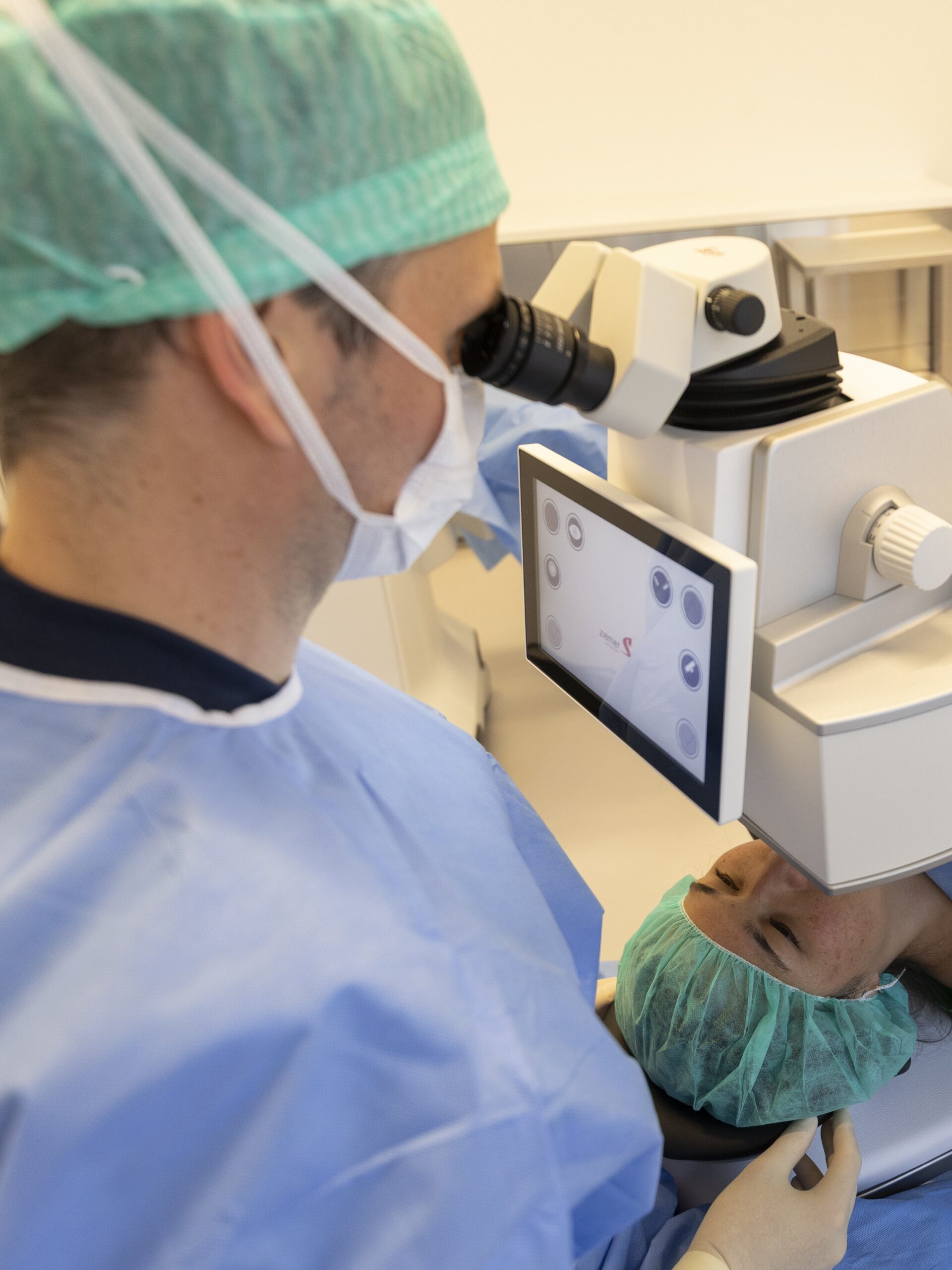
The goal of the PRK procedure is to reduce or completely eliminate the need for glasses or contact lenses. After the surgery, you can expect to achieve your best-corrected vision without the use of visual aids.
In the first week after the procedure, blurred vision is common, and you should plan to take time off from work or studies during this period. Driving is typically not possible in the initial period following the treatment.
It can take up to three months for vision to fully stabilize – especially when treating farsightedness.
Mild to moderate discomfort or pain is common in the first few days and can be relieved with prescribed pain medication.
That’s how easy it is to get started at Copenhagen Eye Institute
Meet your eye doctor
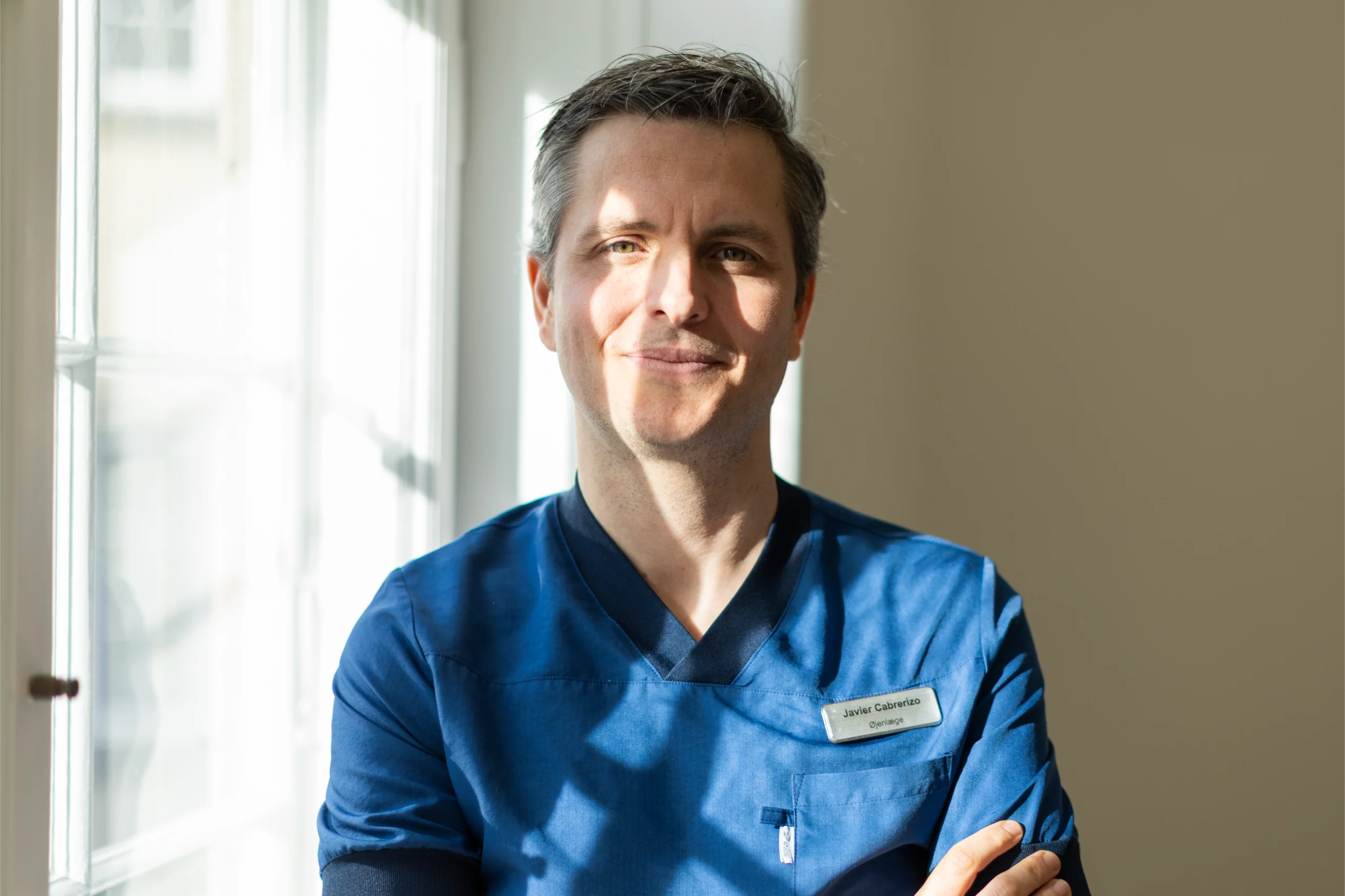
Your safety is built on our experience. At Copenhagen Eye Institute, we place great emphasis on ensuring that you are always treated by top eye surgery specialists.
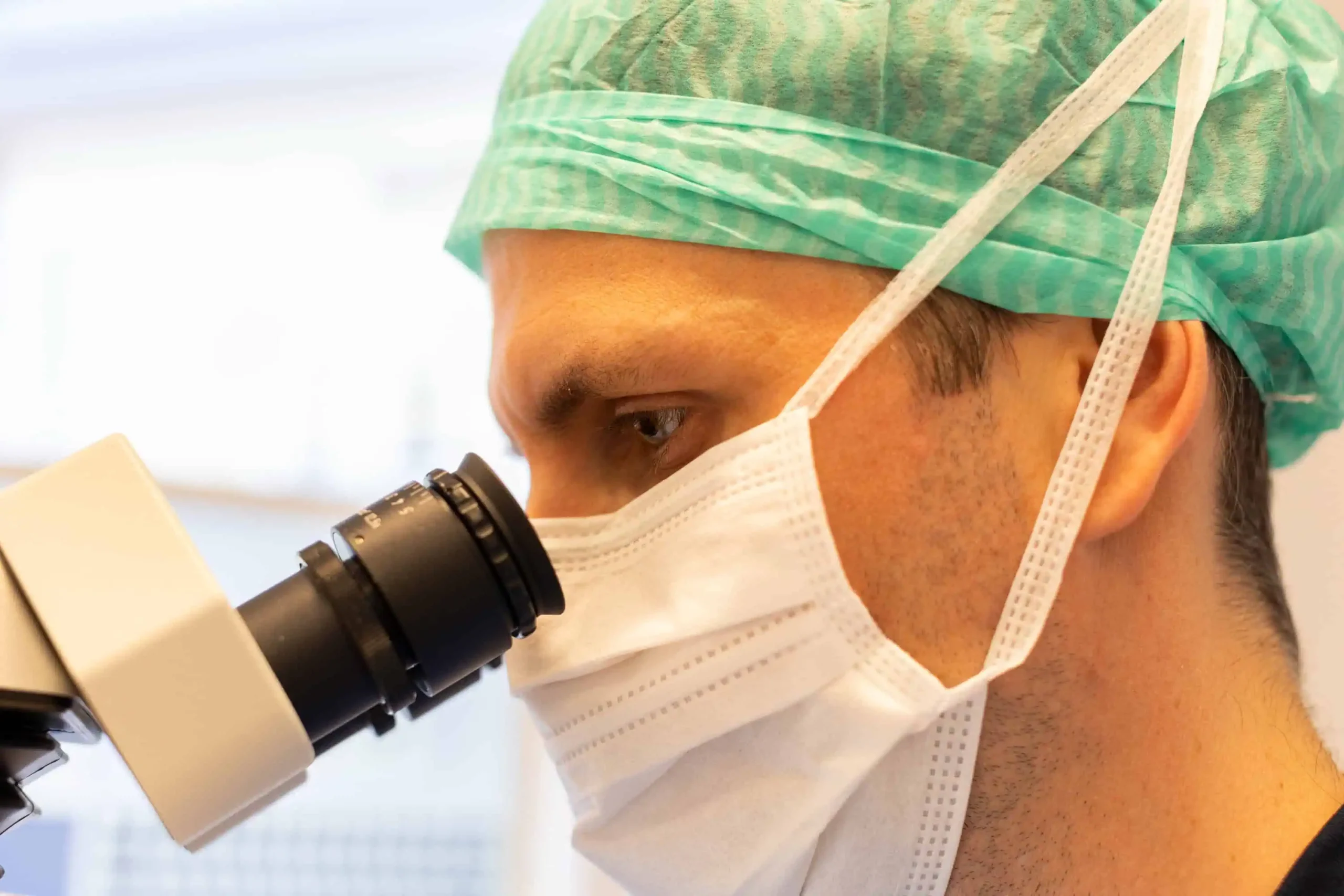
Our eye surgeon is eye doctor Javier Cabrerizo, with many thousands of successful complex procedures behind him. He continuously stays up to date with the latest international research and medical literature in refractive laser surgery, which is your guarantee of top-level clinical expertise.
For us, treatment does not end when the laser is switched off. The follow-up programme is an integral and essential part of our premium concept. We regularly monitor your eyes as they heal and are always available to answer your questions, so you can feel 100% confident throughout your journey towards your new vision.
HOW LONG DOES THE CORRECTION LAST?
The vision correction achieved with AQUA PRK is permanent. However, natural age-related changes such as presbyopia will continue and may lead to a need for reading glasses later in life.
Additionally, after the cornea has been reshaped, it may become more difficult to fit contact lenses in the future.

POTENTIAL SIDE EFFECTS OF LASER EYE SURGERY
Laser eye treatment can cause side effects such as dry eyes, glare, halos around lights, reduced night vision, and in rare cases infection or the need for re-operation. The incidence of complications is considered rare.

TREATMENT GUARANTEE
Necessary check-ups and any required fine-tuning are included at no extra cost. If hospital treatment is needed, we will arrange a referral and follow-up examination with an ophthalmologist.
HEALTH INSURANCE AND INSTALMENT PAYMENTS
Most private health insurance providers in Denmark offer coverage or partial reimbursement for eye specialist consultations and treatments as part of their health plans. It is important that you contact your insurance company before your visit to confirm that they cover the service.
USE YOUR PRIVATE HEALTH INSURANCE.
With a Health+ Credit, you can split the payment of your treatment into smaller, manageable installments without any hassle.
BOOK A FREE CONSULTATION FOR LASER EYE SURGERY

Eye doctor in Copenhagen K
Copenhagen Eye Institute is an eye clinic in Copenhagen with short waiting times and specialized treatment.
FREQUENTLY ASKED QUESTIONS ABOUT LASER EYE SURGERY
How long does laser eye surgery last?
The result is permanent and for most people the effect lasts a lifetime. However, the natural aging of the eye and age-related vision can occur later in life, as it does for everyone.
Read more about how long an eye laser surgery typically lasts in our article here
When can you see after laser eye surgery?
We recommend that you take the day off on the day of surgery and the day after. Most people need 1-2 days of recovery and are back to their everyday life quickly without glasses or lenses. Synet forbedres gradvist. Mange oplever fremgang efter den første uge, mens stabilisering kan tage måneder.
What happens on the day of surgery?
On the day of surgery, you will arrive at our tranquil surroundings at Kejsergade 2 in the center of Copenhagen. We recommend taking the day of surgery off so you can take it easy before and after the operation. It’s perfectly normal to be excited or perhaps nervous.
DYou start by receiving numbing eye drops, after which the eye doctor will call you into the operating room. The actual laser treatment takes about 20 minutes per eye. eye.
You will then be allowed to wait in our waiting room before you go home to make sure you are comfortable after the surgery.
How can I best prepare before surgery?
We make sure to give you personalized and thorough guidance before treatment so you know exactly what to do. Typically, we recommend that you:
- Avoids wearing contact lenses in the days leading up to
- Arrives rested and without makeup or eye cream
- Planning transportation home with a relative
- Have over-the-counter painkillers ready at home use if you need them
We go through all the steps with you well in advance, so you can feel completely comfortable and prepared.
What should I be aware of after surgery?
Use eye drops as directed, avoid rubbing your eyes and take it easy at first. We will give you thorough guidance and follow you closely in the days and weeks after treatment.
Is your preliminary survey free of charge?
Yes, our initial consultation is free of charge. We’ll carry out a thorough examination of your eyes, assess your suitability and discuss your needs and preferences with you. You’ll receive honest advice from our experienced clinical optician, and it’s entirely up to you whether you wish to proceed. Book your free initial consultation today and gain clarity on your options. Please note, however, that there is a no-show fee of 300 kr.
How painful is laser eye surgery?
AQUA PRK is not usually painful during the procedure, but some people experience discomfort during the first few days of healing.
Can you take part in sport after laser eye surgery?
Yes. Once they have recovered, most people can return to sport and physical activity.
Can you have laser eye surgery if you wear contact lenses?
Yes, but you will usually need to stop wearing contact lenses before the examination to ensure the measurements are accurate.
Is laser eye surgery safe?
Modern laser eye surgery is a well-documented treatment, but as with all surgical procedures, there are potential side effects.