
Nearsightedness (myopia)
Briefly about nearsightedness:
- Nearsightedness (myopia) means that you see well at close range but blurred at a distance.
- The condition is caused by the eye being too long or the cornea refracting light too strongly.
- Myopia often develops in childhood and may progress with age.
- Nearsightedness can be corrected with glasses, contact lenses, or surgery.
- Regular eye examinations are important to monitor its progression.
- Conversely, farsightedness (hyperopia) is when you have trouble seeing up close
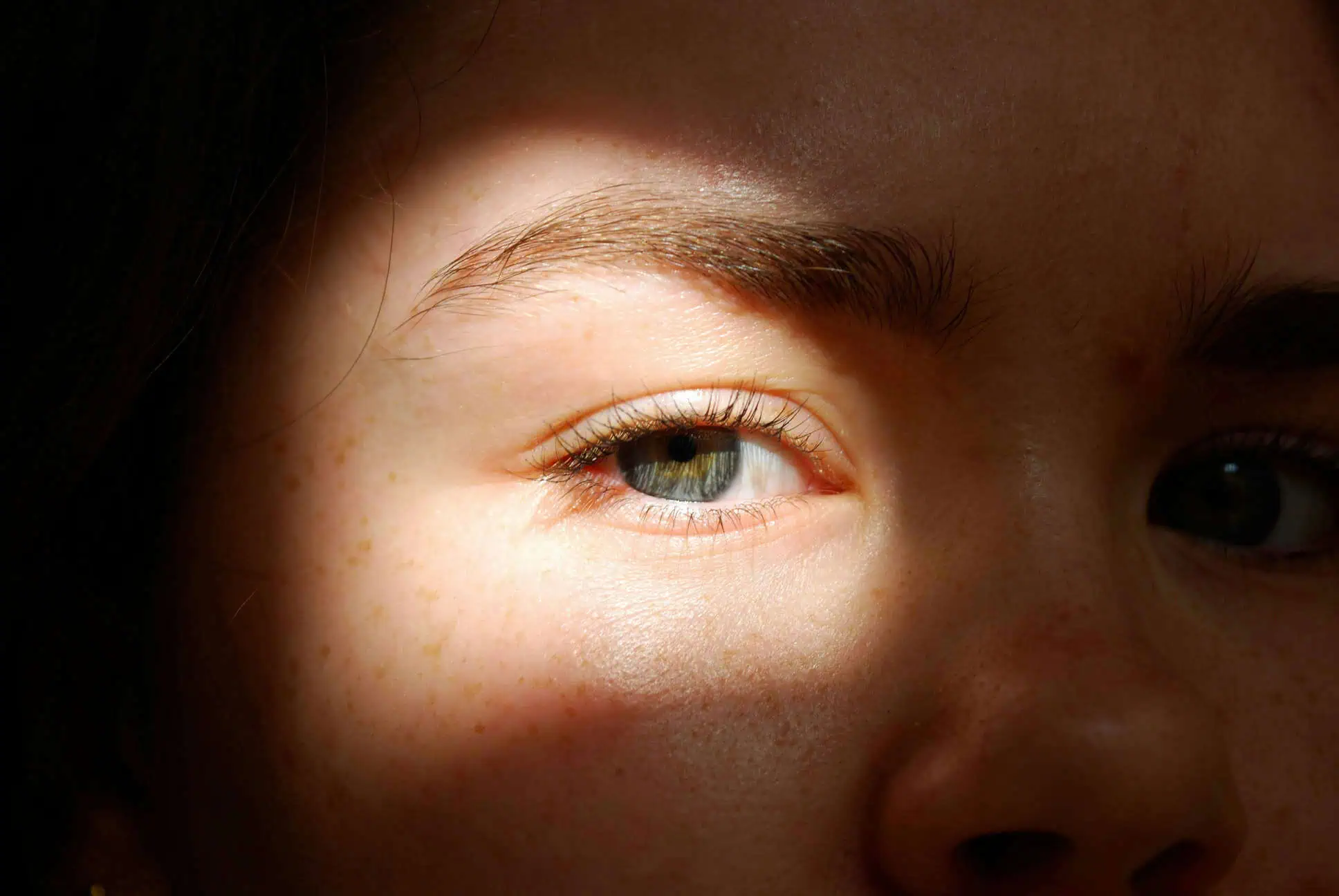
What is nearsightedness?
Nearsightedness, also called myopia, is one of the most common refractive errors. If you are nearsighted, you can typically read and see clearly at close range, but experience blurred vision when looking at objects farther away—such as road signs, blackboards, or TV screens.
With normal vision, light is focused precisely on the retina. With myopia, light is focused in front of the retina, resulting in blurred distance vision.
What causes nearsightedness?
Myopia most often occurs because:
- The eye is longer than normal
- The cornea is more curved than it should be
Both hereditary and environmental factors are involved. If one or both parents are nearsighted, the risk is higher. Research also shows that extensive close-up work (screens, reading) and limited time outdoors can contribute to the development of nearsightedness, especially in children.
Symptoms of nearsightedness
The most common symptoms are:
- Blurred distance vision
- Tired eyes
- Squinting to see more clearly
- Difficulty seeing blackboards, signs, or license plates
In children, the signs can be more subtle, such as trouble concentrating or sitting very close to screens.
How is myopia diagnosed?
Several eye conditions can cause symptoms similar to myopia. Nearsightedness is diagnosed through a thorough eye examination by an ophthalmologist. The examination measures refractive errors and also assesses the overall health of the eye.
Early diagnosis is especially important in children, as myopia can progress over time.
Treatment and correction of nearsightedness
There are several options for correcting nearsightedness:
- Glasses – the most common and simple solution
- Contact lenses – an alternative to glasses
- Laser eye surgery or lens replacement for selected patients
- For severe vision problems, an ICL lens implant may be an option.
The choice depends on age, prescription, lifestyle, and eye health. An ophthalmologist can advise on the best solution for you.
LASIK is a popular laser eye treatment, but this method creates a flap on the surface of the eye. With AQUA PRK, no flap is created, making it better suited for people with an active lifestyle, as this flap cannot become dislodged after a blow or poke to the eye.
Nearsightedness in children and adolescents
Myopia often begins in childhood and can worsen during the teenage years. Therefore, the following are recommended:
- Regular eye check-ups
- Daily time outdoors
- Breaks during screen work
In some cases, special treatments can slow the progression of nearsightedness in children.
When should you contact an ophthalmologist?
You should have your vision examined if:
- You experience blurred distance vision
- Your child complains about vision problems
- Your current glasses or contact lens prescription no longer works optimally
Early intervention provides the best chances for good and stable vision.
Written by ophthalmologist Javier Cabrerizo.