Øjenlaseroperation i København -
slip for briller og kontaktlinser
En øjenlaseroperation er en synskorrigerende behandling, hvor en præcis laser ændrer formen på hornhinden, så synsfejl som nærsynethed, langsynethed og bygningsfejl korrigeres.
PREMIUM ØJENLASER
Brillefrihed med synskorrektion
pris
15.000 kr. per øje
Delbetaling med Sundhed+
- Laserbehandling af nærsynethed, langsynethed og bygningsfejl.
- Gratis og grundig forundersøgelse
- Flap-fri AQUA PRK teknologi
- Tilpasning af behandling ud fra din livsstil
- Kontroller efter operationen
- Tryg opfølgning hele vejen
Prisen inkluderer forundersøgelse, individuel behandlingsplan, operation, alle efterkontroller og behandlingsgaranti.
Kort fortalt: øjenlaseroperation
Hvad er øjenlaser?
Laserbehandling af hornhinden for at korrigere synsfejl
Hvem egner det sig til?
Typisk personer over 20 år med stabil synsstyrke
Typisk alder
Under 45 år
Hvilke fejl kan behandles?
Nærsynethed, langsynethed og bygningsfejl
Resultat
Mindre eller ingen afhængighed af briller
Pris
15.000 kr. pr. øje
Glem alt om briller, kontaktlinser og begrænsninger

Hvorfor vælger mange patienter en specialistklinik?
Når du vælger øjenlaser, vælger du ikke kun en pris. Du vælger en behandling, der skal fungere hver dag i mange år.
Vores pris afspejler:
- Høj specialisering inden for øjenkirurgi
- Grundig individuel vurdering af dine øjne og tilpasning af behandling ud fra din livsstil
- Moderne teknologi og udstyr
- Fokus på sikkerhed før, under og efter behandlingen
Hos os handler øjenlaser ikke om at behandle flest muligt, men om at finde den rigtige løsning til den enkelte patient.

Vågn op, præstér og vær aktiv uden bekymringer
Forestil dig at vågne om morgenen og kunne se uret helt skarpt som det allerførste. Eller at kunne løbe en tur i regnvejr, svømme, dyrke crossfit eller præstere på jobbet uden kontaktlinser, der irriterer og udtørrer. Brillefrihed handler ikke kun om synskorrigering – det handler om den uforstyrrede frihed til at leve dit liv fuldt ud og præstere optimalt i alle tænkelige situationer.

Vejen fra briller og kontaktlinser til varig frihed
Mange ser en øjenlaseroperation som en stor beslutning – og det er det også. Men når du lægger de akkumulerede udgifter til briller, abonnementsordninger på kontaktlinser og regelmæssige optikerbesøg sammen over en årrække, er laserbehandling en langsigtet investering. Både i din personlige frihed og i din økonomi.
Aqua PRK – Højteknologisk overfladebehandling uden "flap"

Ultimativ styrke og stabilitet i hornhinden
Når laseren arbejder direkte på overfladen, bevares den dybere og strukturelle styrke i din hornhinde intakt. Efter den naturlige ophelingsperiode er dit øje præcis lige så stærkt og modstandsdygtigt over for stød og slag, som det var før operationen. Det giver en uvurderlig tryghed hele livet igennem.

Den ideelle lasermetode til en aktiv hverdag og kontaktsport
Fordi AQUA PRK er en fuldstændig flap-fri behandling, er der efter ophelingen absolut ingen risiko for, at en flap kan forskyde sig eller flytte på sig. Det gør metoden ekstremt populær og ideel blandt folk med en meget aktiv livsstil. Uanset om du dyrker kampsport, crossfit, håndbold, professionel elitesport eller har et fysisk krævende arbejde, kan du dyrke dine aktiviteter med 100% ro i maven.

Hop i vandet og gå i bad uden bekymringer
Hvis du bruger kontaktlinser, kender du alt til besværet, hver gang du skal i bad, en tur i swimmingpoolen eller hoppe i havet. Vand og kontaktlinser er en dårlig kombination, da det både øger risikoen for, at linsen skyller ud, og skaber grobund for farlige bakterier bag linsen. Med AQUA PRK slipper du fuldstændig for de bekymringer. Fordi behandlingen er helt uden flap, og dine øjne heler naturligt op, kan du efter den indledende ophelingsperiode åbne øjnene under vand, svømme, dykke og gå i bad med total frihed.
AQUA PRK eller LASIK - hvilken øjenlaser passer bedst?
Både AQUA PRK og LASIK er fantastiske, sikre og topmoderne premium-behandlinger. Den væsentligste forskel ligger i måden, laseren får adgang til at korrigere synet på, samt hvordan dine øjne heler bagefter.
Hos Copenhagen Eye Institute anvender vi AQUA PRK, fordi metoden giver en stærk hornhindestruktur uden flap og derfor passer godt til aktive patienter.
LASIK: Det hurtige resultat med minimal restitution
- Procedure: Kirurgen laver en tynd flap i hornhinden, løfter den til side, anvender laseren, og lægger derefter flappen tilbage.
- Heling: Hurtig. Synet er ofte godt dagen efter, og der er minimal smerte.
- Fordel: Hurtig heling
- Ulempe: Skaber en permanent flap, som i sjældne tilfælde kan give komplikationer ved slag eller prik mod øjet, og giver højere risiko for tørre øjne i starten.
AQUA PRK: Den stærke og flap-frie løsning til det aktive liv
- Procedure: Kirurgen fjerner det yderste cellelag (epitelet) helt, anvender laseren direkte på overfladen, og sætter en bandagelinse på som beskyttelse.
- Heling: Langsommere. Det tager 4-7 dage for epitelet at vokse ud igen, og synet stabiliseres gradvist over uger/måneder.
- Fordel: Giver en strukturelt stærkere hornhinde uden flap, så du kan være aktiv uden bekymring og lavere risiko for tørre øjne samt nemmere mulighed for touch-ups
- Ulempe: Kan være mere smertefuldt under helingsperioden og kræver længere helingstid.
Læs mere om forskellen på AQUA PRK og LASIK.
Hvem egner sig til øjenlaser?
De fleste kandidater til øjenlaser er:
- over 20 år
- har haft stabil styrke i mindst 6-12 måneder
- har sunde øjne
- ønsker at reducere behovet for briller eller kontaktlinser
Øjenlaser anbefales typisk ikke til personer med:
- ustabil brillestyrke
- visse hornhindesygdomme
- alvorlige øjensygdomme
- Markant alderssyn
En grundig forundersøgelse afgør altid, om behandlingen passer til dine øjne.
Sådan foregår en AQUA PRK øjenlaseroperation
1. Forundersøgelse
Vi måler dine øjne og vurderer, om du er egnet.
2. Bedøvelse
Øjet bedøves med lokalbedøvende dråber.
3. Laserbehandling
Laseren former hornhinden med høj præcision.
4. Heling
En beskyttende kontaktlinse placeres, mens hornhinden heler.
Den ultimative tryghed: Om AQUA PRK proceduren
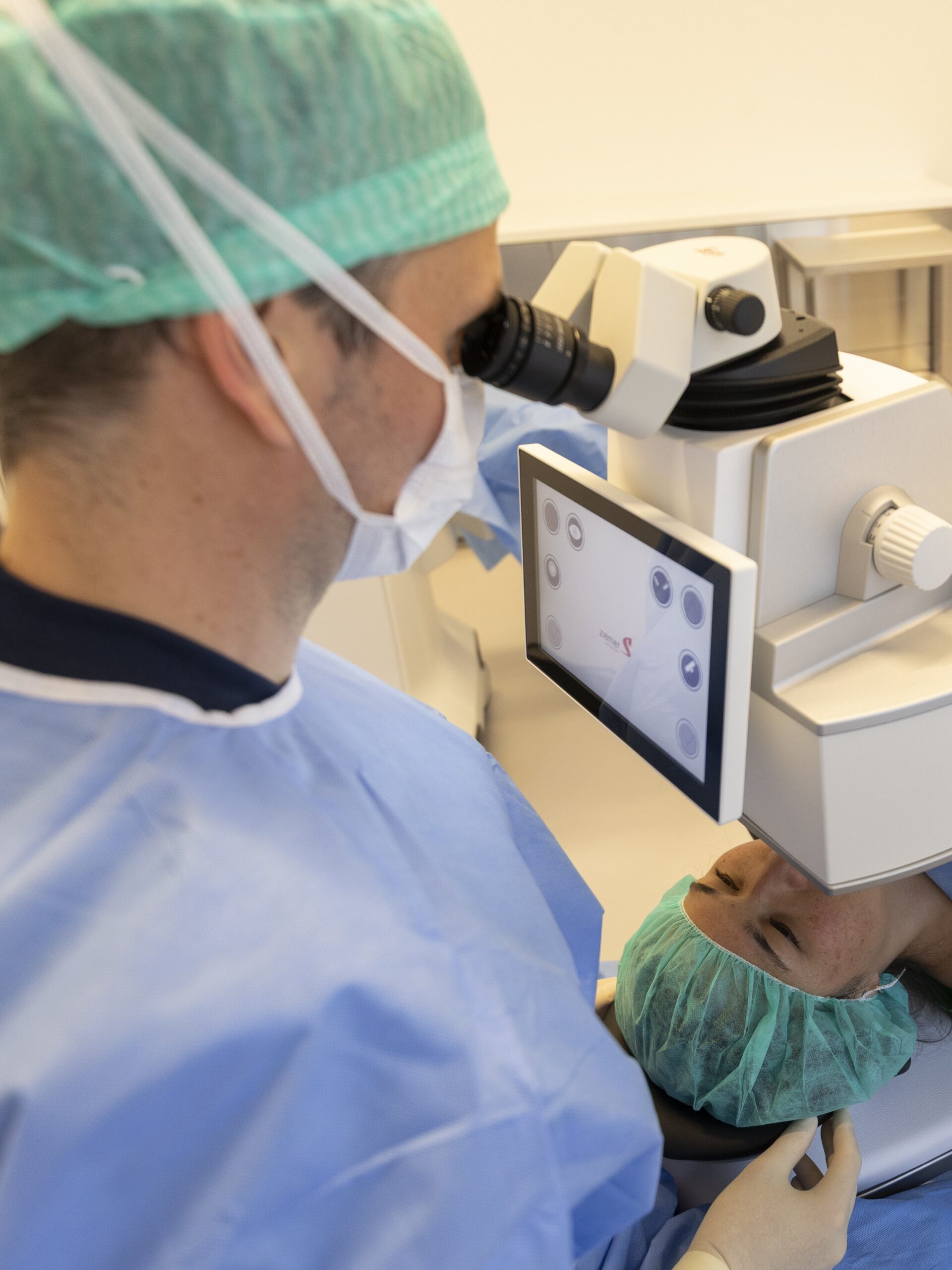
PRK (Photorefraktiv Keratektomi) er en avanceret teknik til korrektion af synsfejl med laser. Under proceduren påføres en mild alkoholopløsning på hornhinden, for at løsne det yderste cellelag (epitelet), som derefter forsigtigt fjernes.
Herefter benyttes den nyeste teknologi – en solid state ablationslaser (Aquariuz fra Ziemer Ophthalmic Systems AG) – til at omforme hornhindens underliggende væv, med det formål at korrigere synsfejlen.
Når proceduren er slut, placeres en blød beskyttende kontaktlinse på hornhinden, for at fremme helingen og øge komforten. PRK kan effektivt anvendes til behandling af:
- Nærsynethed (myopi)
- Langsynethed (hypermetropi)
- Bygningsfejl (astigmatisme)
Graden af synskorrektion tilpasses individuelt og afhænger blandt andet af hornhindens tykkelse og synets stabilitet.
Behandlingen er henvendt til personer over 18 år med myopi, hypermetropi og/eller astigmatisme, og hvor synet har været stabilt i mindst 6 måneder før planlagt operation.
Personer med aldersbetinget langsynethed (presbyopi), kan i visse tilfælde også være kandidater til AQUA PRK, men det kan være nødvendigt fortsat at bruge læsebriller efter operationen. En særlig monovision-behandling kan overvejes for disse patienter.
Behagelig behandling for øjnene
AQUARIUZ behandler øjet på en skånsom måde uden at udtørre hornhinden unødigt. Det hjælper med at bevare øjets naturlige fugtbalance under behandlingen, hvilket kan gøre oplevelsen mere behagelig og bidrage til stabile og præcise resultater.
Næsten ingen lugt under behandlingen
Ved traditionelle laserbehandlinger kan der opstå en karakteristisk “brændt” lugt. Med AQUARIUZ reduceres denne lugt betydeligt. Systemet fjerner effektivt partikler og lugte, så både patienter og behandlere oplever et mere behageligt behandlingsmiljø.
En mere rolig oplevelse
Mange traditionelle excimerlasere afgiver en høj og skarp lyd under behandlingen. AQUARIUZ er udviklet med en anden laserteknologi, som giver et mere dæmpet lydniveau. Det kan gøre behandlingen mere afslappende og mindske stress for både patient og behandlere.
BANEBRYDENDE ØJENLASER HOS
COPENHAGEN EYE INSTITUTE
Hos Copenhagen Eye Institute får du adgang til verdens nyeste og mest avancerede teknologier inden for øjenlaser, AQUARIUZ fra Ziemer. Det er ikke bare en hvilken som helst laser. Det er fremtidens øjenlaser. Der findes kun fem i verden, og den eneste af sin slags i Danmark.
AQUARIUZ-laserens præcision er uden sammenligning og gør det muligt at udføre synskorrigerende behandlinger med ekstrem nøjagtighed samt reduceret øjentørhed, lugt og støj. For dig som patient betyder det en mere skånsom behandling, kortere restitutionstid og bedre forudsætninger for et stabilt og skarpt syn. Din livskvalitet er nemlig det vigtigste for os.
Du er i trygge hænder hos erfarne øjenkirurger, blandt andet Javier Caberizo, der anvender den nyeste laserteknologi for at sikre det bedst mulige resultat. Tilpasset dine behov og dine øjne. Når du vælger os, vælger du det højeste niveau af ekspertise, sikkerhed og innovation. Mange af vores tidligere patienter roser os også for vores professionalisme og menneskelige tilgang.
Laser vs. kontaktlinser

Den oversete og akkumulerede risiko ved kontaktlinser
Mange opfatter kontaktlinser som den mest risikofrie løsning, men virkeligheden er ofte en anden. Hver eneste gang du rører ved dine øjne, sætter en linse i eller tager den ud, udsætter du hornhinden for mikroskopiske ridser og bakterier. Kontaktlinser er for mange en god løsning, men nogle oplever tørhed, irritation eller begrænsninger i hverdagen ved længerevarende brug.

En investering i dit syn frem for midlertidige løsninger
Hvor kontaktlinser og briller er midlertidige symptombehandlinger, der skal vedligeholdes og udskiftes konstant, er en øjenlaseroperation en permanent og strukturel korrektion af din synsfejl. Du fjerner én gang for alle behovet for de daglige risici og det besvær, der er forbundet med fremmedlegemer på øjet. Dette forhindrer dog ikke allerssyn.
Forventet resultat og helingsperiode
Målet med PRK-proceduren, er at reducere, eller helt eliminere behovet for briller eller kontaktlinser. Efter operationen, kan du forvente at opnå din bedst korrigerede synsstyrke, uden brug af visuelle hjælpemidler.
I den første uge efter indgrebet er sløret syn almindeligt, og du bør planlægge at tage fri fra arbejde eller studier i denne periode. Bilkørsel er typisk ikke muligt i denne første tid efter behandlingen.
Det kan tage op til tre måneder, før synet er helt stabiliseret – især ved behandling af langsynethed.
Let til moderat ubehag eller smerte, er almindeligt i de første dage, og kan lindres med ordineret smertestillende medicin.
Så nemt kommer du i gang hos Copenhagen Eye Institute

Mød din øjenlæge
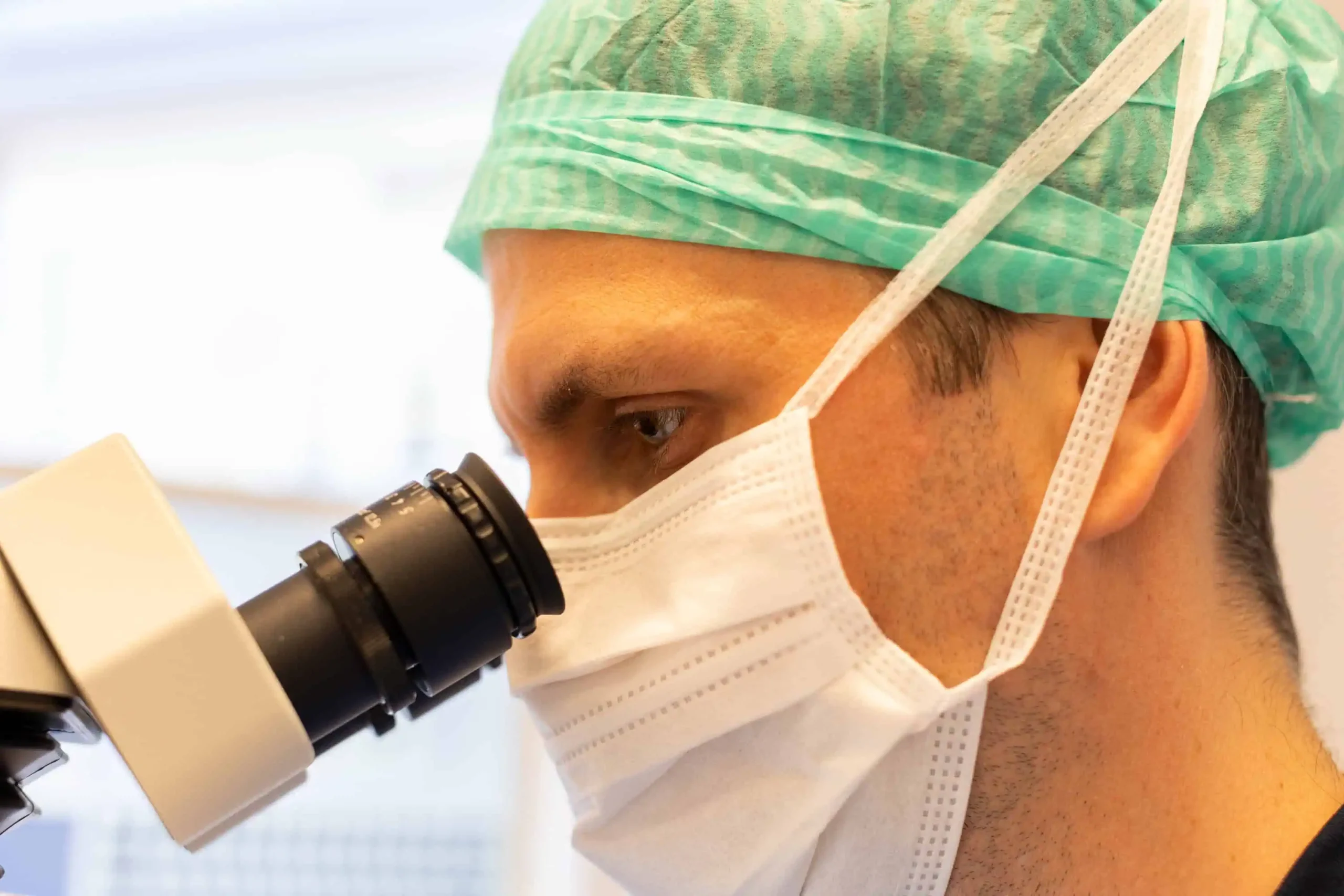
Din tryghed baserer sig på vores erfaring. Hos Copenhagen Eye Institute lægger vi stor vægt på, at du altid møder topspecialister i øjenkirurgi.
Vores øjenkirurg er øjenlæge Javier Cabrerizo med mange tusinde succesfulde komplekse operationer bag sig. Han holder sig konstant opdateret på den nyeste internationale forskning og faglitteratur inden for refraktiv laserkirurgi, hvilket er din garanti for faglig ekspertise i absolut topklasse.
For os slutter en behandling ikke, når laseren slukkes. Det efterfølgende kontrolforløb er en integreret og afgørende del af vores premium-koncept. Vi kontrollerer dine øjnes opheling regelmæssigt og står altid til rådighed for spørgsmål, så du kan føle dig 100% tryg under hele rejsen mod dit nye syn.
HVOR LÆNGE HOLDER INDGREBETS KORREKTION?
Den opnåede synskorrektion med AQUA PRK er permanent. Dog vil naturlige aldersforandringer som presbyopi fortsætte, og kan medføre behov for læsebriller senere i livet.
Desuden kan det, efter hornhindens omformning, vise sig vanskeligere at tilpasse kontaktlinser i fremtiden.

MULIGE BIVIRKNINGER VED ØJENLASER
Laserbehandling af øjne kan medføre bivirkninger som tørre øjne, blænding, halos omkring lys, nedsat nattesyn, og i sjældne tilfælde infektion eller behov for re-operation. Forekomsten af komplikationer vurderes som sjælden.

BEHANDLINGSGARANTI
Nødvendige kontroller og eventuelle finjusteringer er inkluderet uden ekstra omkostninger. Ved behov for hospitalsbehandling sørger vi for henvisning og opfølgende øjenlægekontrol.
SUNDHEDSFORSIKRING OG DELBETALING
De fleste private sundhedsforsikringer i Danmark tilbyder dækning eller tilbyder delt tilskud af øjenlægekonsultationer og behandlinger som en del af deres sundhedsordninger. Det er vigtigt at du kontakter dit forsikringsselskab inden dit besøg for at bekræfte, at de dækker ydelsen.
BENYT DIN PRIVATE SUNDHEDSFORSIKRING.
Med en Sundhed+ Kredit har du mulighed for at dele betalingen af din behandling op i mindre, overskuelige rater helt uden besvær.
BOOK GRATIS FORUNDERSØGELSE TIL ØJENLASEROPERATION

Øjenlæge i København K
Copenhagen Eye Institute er en øjenlæge i København med kort ventetid og specialiseret behandling.
OFTE STILLEDE SPØRGSMÅL OM ØJENLASEROPERATION
Hvor længe holder en øjenlaseroperation?
Resultatet er varigt, og for de fleste varer effekten livet ud. Øjets naturlige aldring og alderssyn kan dog opstå senere i livet, som det gør hos alle.
Læs mere om, hvor længe en øjenlaseroperation typisk holder i vores artikel her
Hvornår kan man se efter øjenlaser?
Vi anbefaler dig at tage fri samme dag, som operationsdagen, og også efterfølgende dag. De fleste har brug for 1-2 dages restitution, og er tilbage i deres hverdag hurtigt uden briller eller linser. Synet forbedres gradvist. Mange oplever fremgang efter den første uge, mens stabilisering kan tage måneder.
Hvordan foregår det på operationsdagen?
På selve operationsdagen ankommer du til vores rolige omgivelser på Kejsergade 2 midt i København. Vi anbefaler, at tage fri på operationsdagen, så du kan tage den med ro før og efter operationen. Det er helt normalt at være spændt eller måske nervøs.
Du starter med at få bedøvende øjendråber, hvorefter øjenlægen henter dig ind på operationsstuen. Selve laser-behandlingen tager omkring 20 minutter pr. øje.
Derefter får du lov til at vente i vores venteværelse inden du tager hjem, så vi sørger for at du har det godt efter operationen.
Hvordan kan jeg forberede mig bedst inden operationen?
Vi sørger for at give dig personlig og grundig vejledning inden behandlingen, så du ved præcis, hvad du skal gøre. Typisk anbefaler vi, at du:
- Undgår at bruge kontaktlinser i dagene op til
- Møder udhvilet og uden makeup eller creme omkring øjnene
- Planlægger transport hjem med en pårørende
- Har håndkøbs smertestillende til hjemmet, hvis du får brug for det
Vi gennemgår alle trin med dig i god tid, så du kan føle dig helt tryg og forberedt.
Hvad skal jeg være opmærksom på efter operationen?
Du skal bruge øjendråber som anvist, undgå at gnide øjnene og tage det roligt i starten. Vi giver dig en grundig vejledning og følger dig tæt i dagene og ugerne efter behandlingen.
Er jeres forundersøgelse gratis?
Ja, vores forundersøgelsen er gratis. Vi undersøger dine øjne grundigt, vurderer din egnethed og taler med dig om dine behov og ønsker. Du får ærlig rådgivning hos vores erfarne kliniske optiker og det er helt op til dig, om du vil gå videre. Book din gratis forundersøgelse i dag og få klarhed om dine muligheder. Dog er der et udeblivelsesgebyr på 300 kr.
Hvor ondt gør en øjenlaseroperation?
AQUA PRK er normalt ikke smertefuld under behandlingen, men nogle oplever ubehag de første dage under helingen.
Kan man dyrke sport efter øjenlaser?
Ja. Efter heling kan de fleste vende tilbage til sport og fysisk aktivitet.
Kan man få øjenlaser hvis man bruger kontaktlinser?
Ja, men kontaktlinsebrug skal typisk stoppes inden forundersøgelsen, så målingerne bliver præcise.
Er øjenlaser sikkert?
Moderne øjenlaser er en veldokumenteret behandling, men som ved alle operationer findes der mulige bivirkninger.