
Aqua PRK vs. LASIK
Quick answers
What is the difference between Aqua PRK and LASIK?
In LASIK, a permanent flap is cut in the cornea. In Aqua PRK, no incision is made – the laser works directly on the surface of the cornea, and the cornea’s structure remains intact.
Who is Aqua PRK best suited for?
Aqua PRK is particularly well suited for patients with an active lifestyle, a tendency toward dry eyes, thinner corneas, or irregular corneal profiles.
Is Aqua PRK more painful than LASIK?
Both treatments are performed under numbing local anesthetic drops and are painless during the procedure itself. After Aqua PRK, mild discomfort may occur for a few days while the epithelium heals.
What is the healing time after Aqua PRK?
Visual clarity typically stabilizes within one to two weeks. With LASIK, recovery is faster – often 24 to 48 hours.
Can you have Aqua PRK if you are not suitable for LASIK?
Possibly. Patients who are not eligible for LASIK due to thinner corneas can in some cases be treated with Aqua PRK. This is determined through a dedicated examination with us.
There are different techniques for laser vision correction, and although all of them are safe, there are differences that make some of them more suitable for certain patients than others.
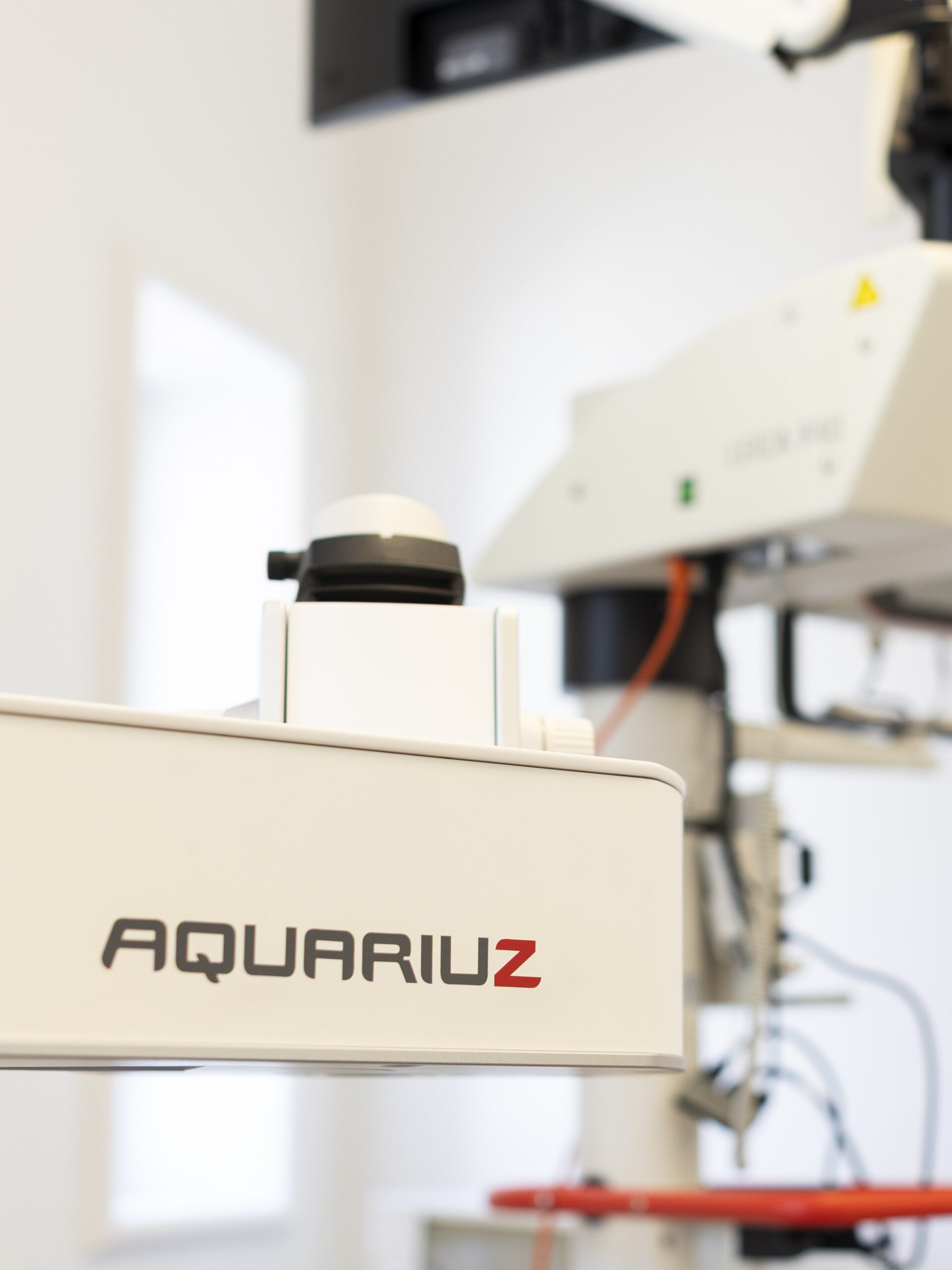
At Copenhagen Eye Institute, we have made a deliberate choice: we offer Aqua PRK using the AQUARIUZ solid-state 210 nm laser. This article explains what that choice means for you, and why we believe Aqua PRK represents a fundamental step forward in corneal laser surgery.
What Is FS-LASIK - and Why Is It Considered a Mature Technology?
FS-LASIK (Laser-Assisted In Situ Keratomileusis) was developed in the early 2000s and has been performed globally for over two decades. The procedure involves two steps: first, a laser instrument (femtosecond laser) cuts a thin hinged flap in the surface of the cornea; then, an excimer laser reshapes the deeper corneal tissue underneath. The flap is then repositioned.
FS-LASIK has helped many patients achieve good visual outcomes, with minor pain and discomfort after surgery. This is made possible by creating a flap in the cornea that is lifted and repositioned after the laser ablation.
The use of a femtosecond cut to create the corneal flap is a permanent and irreversible change to the structure of the eye – and it carries implications that become increasingly important as our understanding of corneal biomechanics deepens.
The flap never fully heals. Once cut, the structural integrity of the cornea in that area is permanently altered. This is not a complication — it is simply how the procedure works. But for patients who participate in active or contact sports, or who have concerns about corneal stability or dry eyes, this is an important factor to consider.
What Is Aqua PRK?
Aqua PRK is a modern evolution of surface ablation, using the AQUARIUZ solid-state 210 nm laser – a next-generation system that overcomes one of the central limitations of traditional PRK and excimer lasers.
The Key Technological Difference: Water Transparency
Traditional ablation lasers operate at a wavelength that is partially absorbed by water molecules present on the corneal surface. Even a thin residual water film over the cornea can scatter or attenuate the beam, reducing the precision and uniformity of treatment.
The AQUARIUZ laser operates at 210 nm – a wavelength at which laser energy is not blocked by water. This means the beam transmits fully and uniformly through the natural tear and water film on the corneal surface, reaching the tissue with complete efficiency. The result is more consistent corneal remodelling, greater predictability of the treatment outcome, and improved precision across the entire treatment zone.
In practical terms: what the laser is instructed to do, it does — with a level of fidelity that the previous generation of lasers could not match.
No Cut. No Flap. No Irreversible Stromal Incision.
With Aqua PRK, there is no cut into the cornea.
In LASIK, the flap represents a deep, irreversible incision through the corneal stroma – the load-bearing layer of the eye. This incision permanently changes the biomechanical behaviour of the cornea, reducing its tensile strength in the flap zone. It also introduces a theoretical risk of flap displacement in the event of significant eye trauma, even years after surgery.
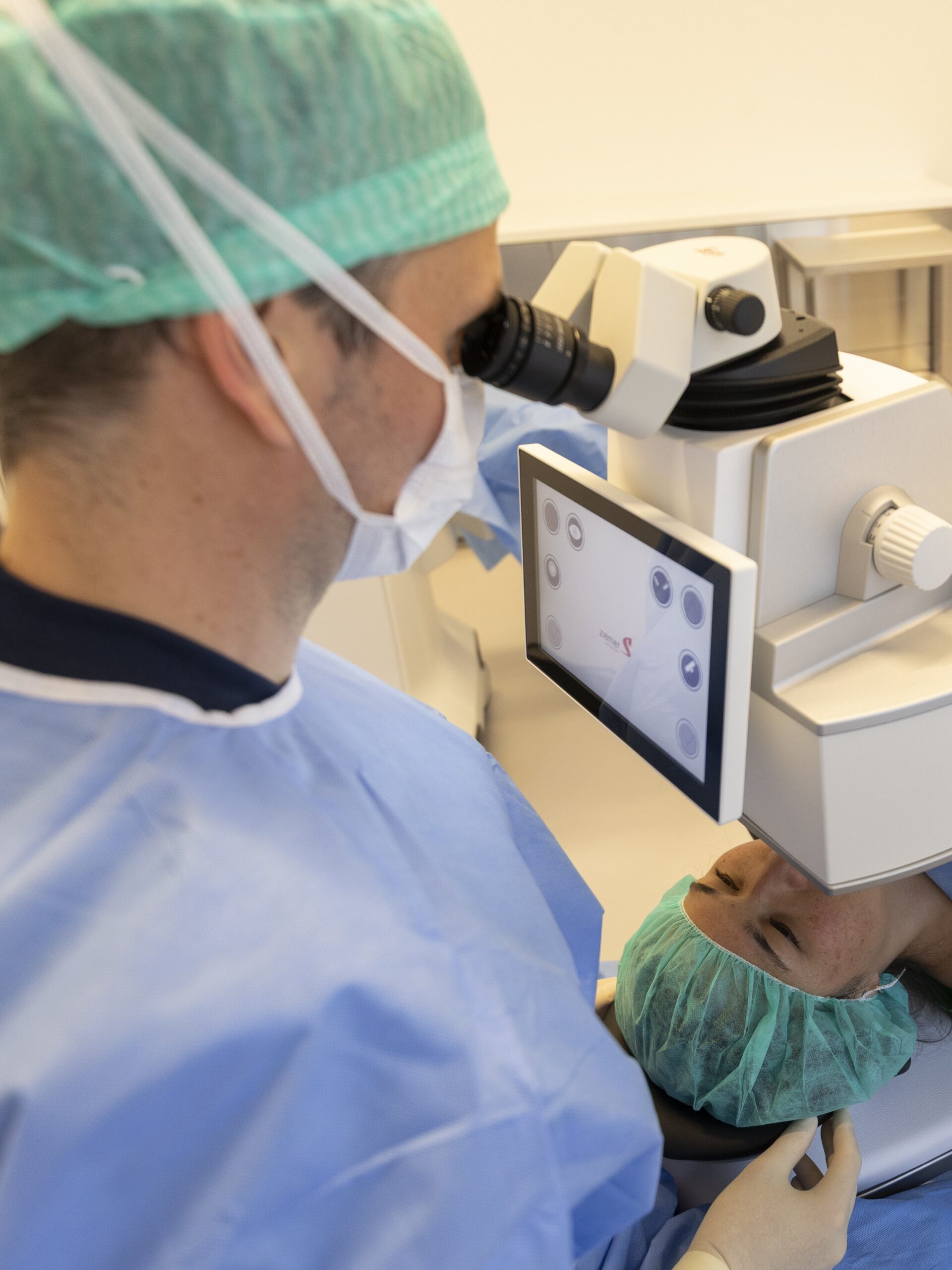
In Aqua PRK, the laser works on the anterior corneal surface after gentle epithelial removal. The stroma is shaped by the laser, but it is never cut. The architecture of the cornea remains structurally intact. There is no hinged flap, no interface, and no irreversible mechanical incision within the tissue.
Who is Aqua PRK best suited for?
Aqua PRK can be an excellent option for a wide range of patients seeking freedom from glasses. It is particularly advantageous in the following situations:
Patients with an active lifestyle
Contact sports, martial arts, water sports, cycling – any activity that carries a risk of impact to the eye makes the absence of a corneal flap a meaningful safety consideration. With Aqua PRK, there is no flap to displace, and the cornea retains its natural structural resilience once healing is complete.
Patients with a tendency to dry eye
Aqua PRK offers a path to laser vision correction that does not permanently alter the deep corneal architecture, and therefore minimises the risk of post-laser dry eye — a common source of discomfort following laser vision correction.
Patients with thinner corneas or borderline corneal thickness
For patients with naturally thinner corneas – or those whose topographic measurements place them at the lower end of the safe range – Aqua PRK removes the flap requirement entirely, expanding the pool of safely treatable candidates.
Patients with irregular corneas or sensitive corneal profiles
Because Aqua PRK does not depend on creating a uniform flap, it can be a better option for patients whose corneal surface geometry makes flap creation less predictable.
What About Recovery?
One of the trade-offs of PRK compared to FS-LASIK is recovery time. With FS-LASIK, visual recovery is typically rapid – many patients see clearly within 24 to 48 hours. With Aqua PRK, the epithelium must regenerate over the first few days, and visual clarity typically stabilises over a period of one to two weeks, with continued refinement over the following months.
We discuss recovery expectations in detail during the preoperative consultation and support all patients through the healing process with a dedicated follow-up protocol.
Aqua PRK at Copenhagen Eye Institute
Copenhagen Eye Institute is one of the pioneers worldwide equipped with the AQUARIUZ solid-state 210 nm laser platform. This is not simply a technical distinction – it represents a clinical commitment to offering our patients the most precise, evidence-informed corneal laser surgery available.
We believe that the structural preservation of the cornea, combined with the precision of the AQUARIUZ system, provides our patients with a safer long-term outcome – and we are prepared to explain exactly why at every consultation.
If you are considering laser vision correction and would like to understand whether Aqua PRK is right for you, we offer a free preliminary examination where we assess your corneal thickness, topography, refractive error, and overall ocular health.
Frequently Asked Questions (FAQ)
Is Aqua PRK more painful than LASIK?
During both procedures, topical anaesthetic drops are used, so neither is painful. In the days following Aqua PRK, patients experience mild discomfort as the epithelium heals – this is manageable with appropriate medication and typically resolves within a few days.
How are the final visual results with Aqua PRK?
Good – and in many patients, excellent. The absence of a flap interface eliminates a source of potential optical irregularity, and the precision of the AQUARIUZ system ensures consistent corneal reshaping.
Read more about how long an eye laser surgery lasts.
Can I have Aqua PRK if I have been told I am not suitable for LASIK?
Some patients who have been declined for LASIK due to thinner corneas may still be suitable candidates for Aqua PRK. However, this is a serious clinical decision that requires a dedicated assessment by a cornea specialist at our clinic.
Selected references (for further reading):
- Schmack I, et al. Cohesive tensile strength of human LASIK wounds with histologic, ultrastructural, and clinical correlations. Journal of Refractive Surgery. 2005;21(5):433–445. — Classic cadaver study showing LASIK wounds heal to only ~2.4% of normal corneal tensile strength even years post-op.
- Jakobs FM, et al. The LASIK flap never fully heals: Long-term data on corneal tensile strength. – Multiple studies confirm the stromal interface remains a permanent structural weak point.