
Cataracts - What Are They and How Are They Treated?
What is cataract?
Cataracts are an eye condition in which the eye’s lens, located behind the pupil, gradually loses its transparency and becomes cloudy. This leads to a slow decline in vision, and without treatment, vision can become significantly impaired. Cataracts most often begin between the ages of 60 and 70, but can occur at any age.
The only effective treatment is surgery. During the procedure, the cloudy lens is removed and replaced with a clear, artificial plastic lens. The eye itself is not harmed by the lens being cloudy, so waiting does not affect the final outcome. In Denmark, 25,000–30,000 people undergo cataract surgery each year.
What are the symptoms of cataract?
Cataracts gradually affect vision and can be experienced in many ways, depending on how widespread the cloudiness in the lens is. In the beginning, cataracts may be mild and cause few or no symptoms, but over time, vision gradually becomes more blurred both at a distance and up close.
Typical symptoms include:
- Blurred vision in general, both when reading and when watching television.
- Glare from bright light, especially in dark environments, during night driving, or in strong sunlight. This is caused by cloudiness in the lens scattering light diffusely onto the retina.
- Double vision that does not disappear when covering one eye.
- Altered color perception, where colors may appear less vivid.
- Grayish pupil in more advanced cataracts.
The symptoms often develop gradually and almost imperceptibly, but in some cases, they can worsen rapidly within a few weeks. The issues usually begin in one eye, but over time, both eyes are affected.
Cataracts do not cause pain, burning, or itching, and in the early stages, they are almost invisible from the outside. However, advanced cataracts can lead to significantly reduced vision, especially at night, and affect daily activities such as reading, watching TV, and driving.
Since some symptoms of cataracts can also be caused by other eye conditions, you should always contact your general practitioner or an eye doctor if you experience gradually declining vision.
Why do you get cataract?
Cataracts most often develop as a natural consequence of aging. The cells of the lens change over time, causing the proteins in the lens to lose their regular structure. This results in the lens gradually becoming cloudy and hard, which reduces visual clarity. The exact reason why the cells change is still not fully understood.
In most cases, cataracts affect both eyes, but the condition often develops gradually over many years and is rarely seen before the age of 65. Vision slowly deteriorates, but in Denmark, the condition is typically detected and treated before it becomes severe.
In addition to aging, cataracts can also develop as a result of:
- Diseases such as diabetes and metabolic disorders
- Injuries to the eyes or repeated inflammation of the iris
- Exposure to high doses of X-rays, infrared, or ultraviolet radiation
- Certain types of medication
- Congenital conditions, including maternal illnesses during pregnancy (e.g., rubella)
Congenital cataracts and cataracts in children can, in some cases, be hereditary.
The name “cataract” comes from the fact that, in advanced cases, the lens can appear grayish. A cloudy lens causes the image formation on the retina’s macula – where our sharp vision is located – to become blurred, reducing vision.
When should you seek help?
Cataracts are not dangerous, but they can be bothersome because vision gradually deteriorates. You should consider contacting your doctor or eye specialist if you experience:
- Worsening near vision
- Changes in color perception
- Problems with glare
- Double vision that does not disappear when covering one eye
It is only when vision impairment begins to affect your daily life that the eye doctor will consider offering surgery. Surgery should take place when the difficulties you experience are reasonably balanced against the risks associated with the procedure. If you do not yet have any vision problems, there is usually no reason to operate.
If one eye is more affected than the other, it may be sensible to start with the most affected eye to achieve the best possible vision before the other eye’s function is reduced.
Research shows that the likelihood of a good outcome after cataract surgery is usually not reduced if the surgery is postponed. During a regular eye examination, the eye doctor can determine whether you have cataracts and advise on the timing of treatment.
How is cataract diagnosed?
Cataracts are detected through a thorough eye examination by an eye doctor. The clarity of the lens is assessed using specialized instruments, including a slit lamp and an ophthalmoscope.
If the lens has cloudiness, the eye doctor can see it as blurred areas in the pupil, which may appear red during the examination due to reflection from the retina. During such an examination, the eye doctor can determine whether you have cataracts and assess the severity of the condition as well as the need for treatment.
How are cataract treated?
Cataracts can only be treated with surgery, as there is no medical treatment or preventive method available. The decision to have cataract surgery depends on how much your vision interferes with your daily life.
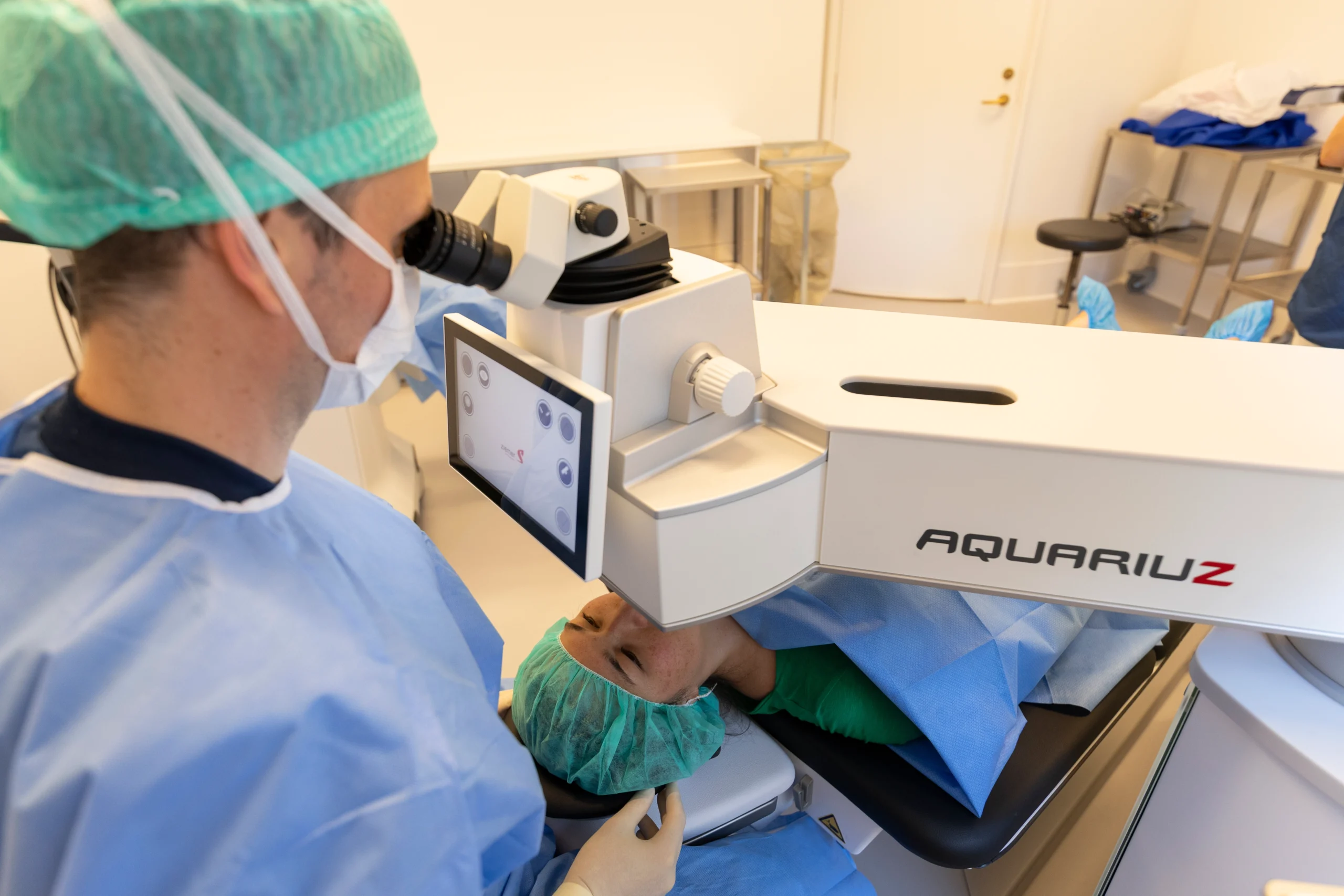
During the surgery, the cloudy lens is removed using microsurgical techniques. The inner part of the lens is dissolved and suctioned out with ultrasound, while the outer capsule is preserved to place a new, artificial lens. The new lens is made of plastic and is measured in advance to fit the eye and the desired prescription. In some cases, lenses can be chosen that correct both distance and near vision or astigmatism.
The procedure is normally performed on an outpatient basis and under local anesthesia, often using only eye drops or in combination with local anesthesia around the eyeball. The small incision the surgeon makes in the cornea typically closes on its own without the need for sutures.
The surgery is safe, and the vast majority of patients experience improved vision afterward. Afterwards, you should be aware of irritation or redness, as this can be a sign of infection, which requires contacting your eye doctor. Four to six weeks after the surgery, measurements for glasses can be taken if necessary.
After cataract treatment?
It is normal to experience a gritty sensation, redness, or slight blurred vision in the first few days. Vision gradually becomes clearer over the following weeks.
Eye drops: You should use prescription eye drops several times daily for 3 weeks after the surgery.
What you should avoid during the first week:
- Rubbing your eyes
- Avoid getting water in your eyes (shower)
- Physical activities
- Eye makeup and eye cream
What you should avoid during the first two weeks:
- Go swimming in pools, hot tubs, or seawater/lake water
- Sauna
What you should avoid during the first four weeks:
- Contact sports
- Eyelash tinting
- Diving and water sports
Follow-up and safety
- A follow-up with the ophthalmologist should take place 1–6 weeks after the surgery.
- Contact an ophthalmologist immediately in case of severe pain, sudden redness, significant blurred vision, or nausea/vomiting.
After cataract surgery, some people will develop a secondary cataract, which can be easily removed with a quick secondary cataract procedure.
Who can treat cataracts?
If you experience reduced vision, it is important to seek medical help, as the symptoms may be caused by other eye conditions that require prompt treatment. Cataracts can only be treated with surgery, and there is no medical treatment that can improve vision. Your eye doctor can determine whether you have cataracts and offer the necessary surgical treatment.