Watch the solar eclipse safely: How to protect your eyes
Quick answers
What is a solar eclipse?
It occurs when the Moon moves between the Earth and the Sun and blocks out the sunlight. During a partial eclipse, the daylight is still so bright that you may inadvertently find yourself staring directly at the Sun.
Why is it dangerous?
The retina has no pain receptors. You can suffer permanent eye damage (solar retinopathy) without realising it is happening. Symptoms do not appear until 4–12 hours later.
Use ONLY certified goggles:
Ordinary sunglasses do not provide protection. Use certified solar eclipse glasses (ISO 12312-2) or a homemade pinhole projector.
Focus on children:
Keep a close eye on children’s glasses, or use a pinhole projector for the youngest children so that they do not look directly at the Sun.
When the moon passes in front of the sun, we are treated to one of the rarest spectacles in the sky. A solar eclipse is a marvellous natural phenomenon to witness – but it is also one of those days when we typically see more patients with retinal damage at the clinic. Here’s what you and your family need to know before you look up.
What exactly is a solar eclipse?
A solar eclipse occurs when the Moon moves between the Earth and the Sun and casts its shadow upon us. During a partial eclipse, the Moon covers only part of the Sun – the sky does not darken, and daylight remains largely as normal. This is, in fact, one of the dangers of a partial eclipse: because it still looks like a normal, clear day, many people underestimate how intense the remaining solar radiation is.
The eye is designed for light - not for staring directly at the Sun
Our eyes use sunlight all the time. The light hits the retina at the back of the eye, where it is converted into nerve signals that the brain interprets as images. It’s a marvellous mechanism – but it isn’t designed to withstand concentrated sunlight for more than a moment at a time. Normally, we automatically protect ourselves: we blink, squint and look away, because it’s uncomfortable to look directly at the Sun.
The problem with a solar eclipse is that the Moon blocks out enough of the Sun’s bright light to make the discomfort disappear – but the invisible radiation that damages the retina is still present. You may therefore end up staring at it for far longer than the eye can tolerate, without noticing anything at all.
What happens if you look directly at the Sun?
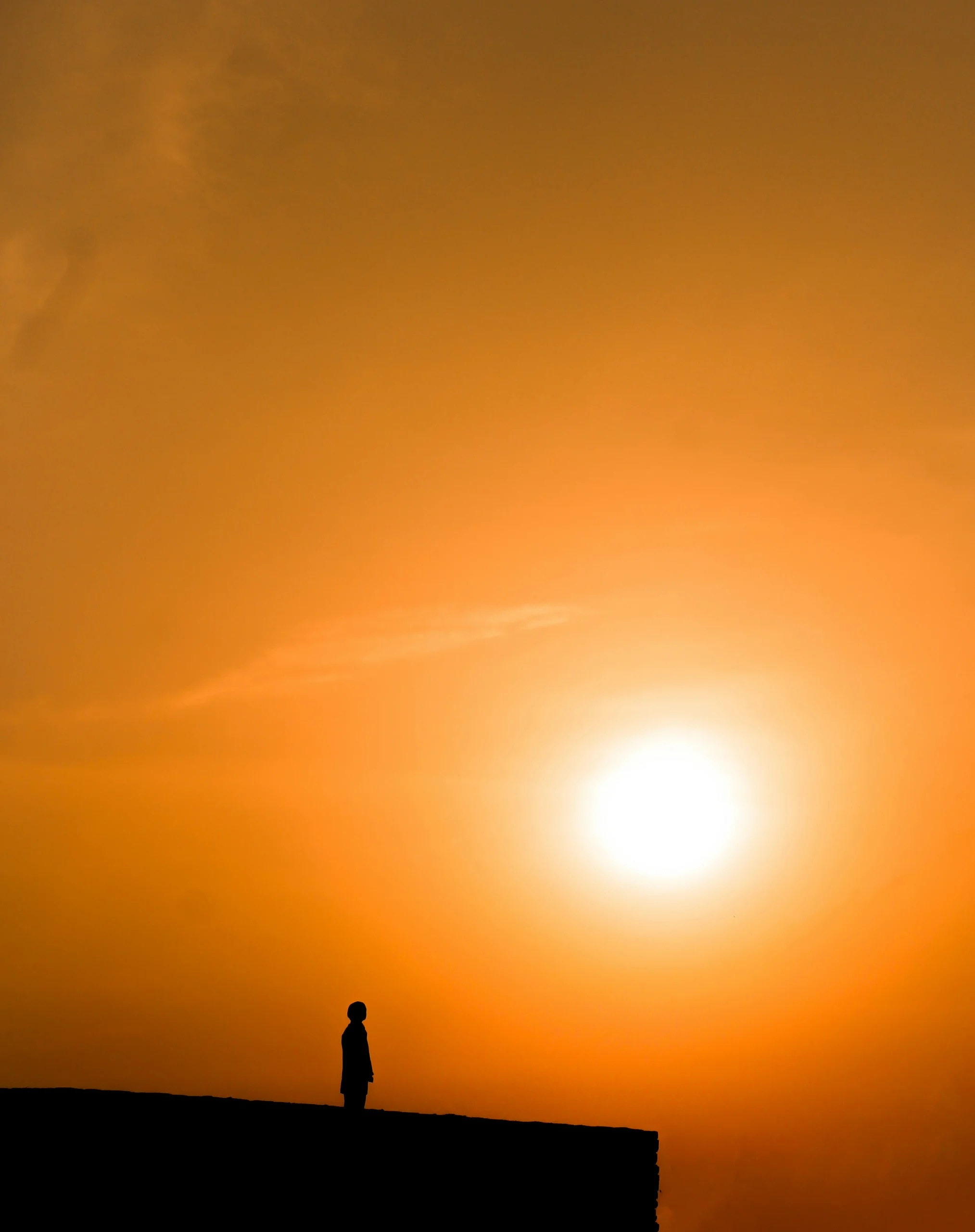
The condition is called solar retinopathy (or ‘eclipse blindness’) and occurs when the concentrated light energy literally burns the cells in the central part of the retina, the macula – the area we use for sharp vision and detail.
The really tricky thing about this injury is that the retina has no pain receptors. So there is no pain, no heat and no warning whilst the injury is occurring. Symptoms usually only appear 4–12 hours later – sometimes the following day.
Symptoms of sun damage to the eye
- Blurred or impaired vision
- A dark or grey spot in the centre of the field of vision (scotoma)
- Distorted vision – straight lines appear bent or wavy
- Altered colour perception
- Increased sensitivity to light
- In rare, serious cases: a hole in the macula, which may require surgery
Unfortunately, there is no treatment that can repair the damage. Some people experience a partial recovery within 3–6 months, but many are left with a permanent, small blind spot or distorted vision. If you experience visual disturbances following a solar eclipse, you should contact an ophthalmologist as soon as possible.
How to watch the eclipse safely
Use certified solar eclipse glasses (ISO 12312-2)
This is the easiest and safest method. The glasses must be marked with the ISO 12312-2 standard, which is specifically approved for direct observation of the Sun. Ordinary sunglasses – no matter how dark they are – do not provide sufficient protection and must never be used. Only buy glasses from well-known, reputable retailers; unfortunately, there are counterfeit ‘ISO-marked’ glasses in circulation that do not meet the standard. Always check the glasses for scratches or holes before using them – if there is any damage, they must be discarded.
Build a pinhole projector
A completely safe and child-friendly method: make a small hole in a piece of card and let the sunlight pass through the hole onto another piece of paper or card. You will see a small, projected image of the eclipsed sun – without ever looking directly at the sky.
Shade 14 welding goggles
Ordinary welding goggles are not safe – but a shade 14 filter is approved for solar observation if eclipse glasses are not available.

Special advice when travelling with children
Children’s curiosity is wonderful – but they rarely grasp the seriousness of the warning ‘don’t look directly at the Sun’, and they often take their glasses off for a split second ‘just to have a quick look’. Therefore:
- Adults must always be present and ensure that the glasses are worn correctly at all times whilst the Sun is visible.
- • Check that the glasses fit snugly and have no gaps through which light can enter from the sides.
- • It’s a good idea to practise wearing the glasses well in advance of the eclipse, so that the child feels comfortable wearing them.
- • For very young children, it’s best to choose the pinhole projector – it requires no self-discipline, as you never look directly at the sky.
- Explain to your child why this is important, in language they can understand: “The sun’s rays are so strong that they can burn a small mark into the eye without it hurting straight away.”
Enjoy the eclipse - but take good care of your eyes
A solar eclipse is a unique opportunity to witness something that most of us only experience a few times in our lives. With the right precautions, there’s no need to worry – just plenty of reason to look forward to it. If you have any concerns about your eclipse glasses, your eyes after the eclipse, or if you’re experiencing any of the symptoms described above, you’re always welcome to contact us at the Copenhagen Eye Institute.
Sources:
- American Academy of Ophthalmology (AAO) – Solar Eclipse Eye Safety
- American Astronomical Society (AAS) – ISO 12312-2 Standard for Solar Viewers
- NASA – Eclipse Safety Guidelines
- Ophthalmology Times – Diagnosis and Management of Solar Retinopathy
This article has been produced for the Copenhagen Eye Institute and is not a substitute for personal medical advice.
Written by ophthalmologist Javier Cabrerizo
SEE ALSO